Full-Grain vs Top-Grain vs Split Leather (Buyer Guide)
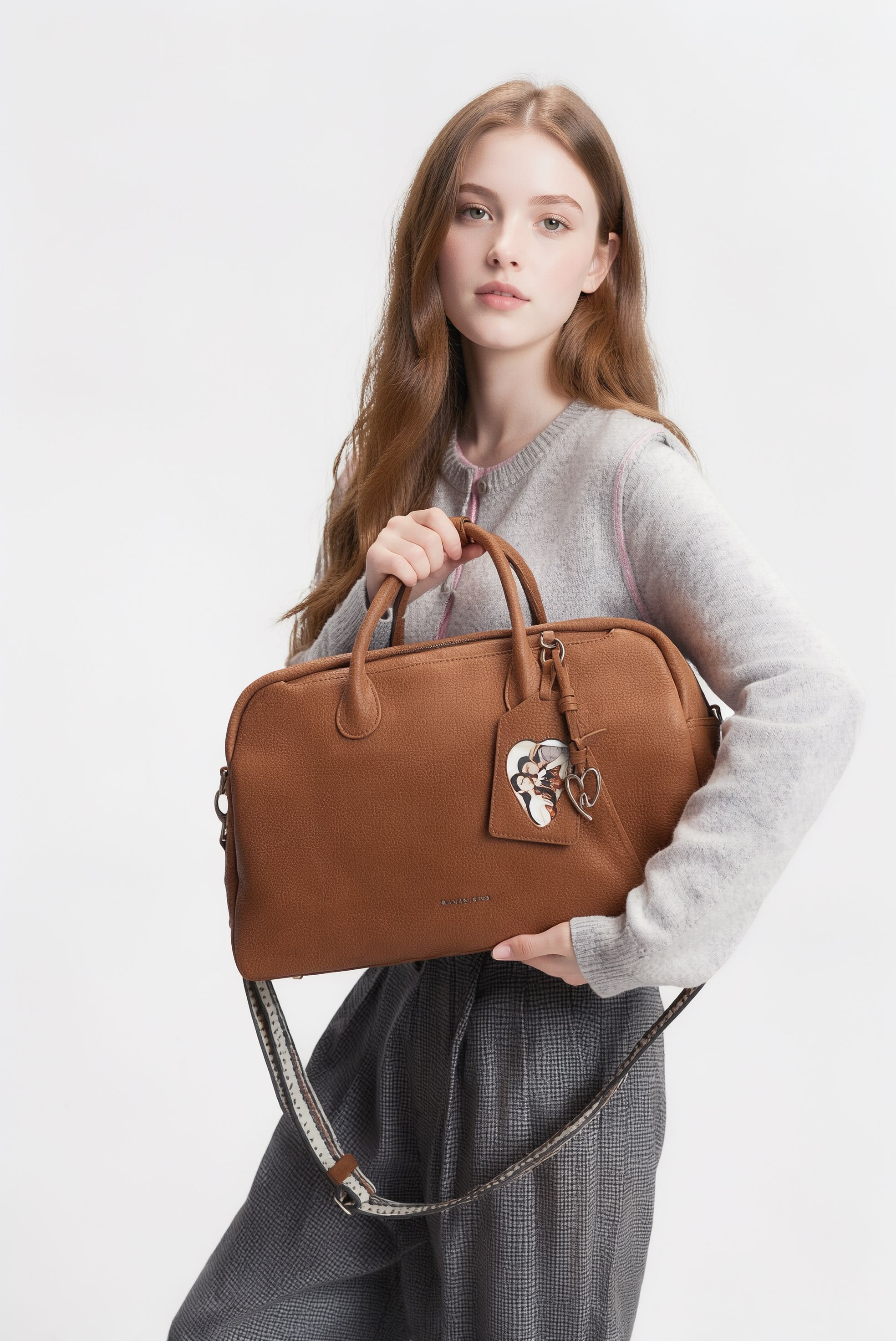
If you’re choosing a leather bag online, you’re not just picking a color. You’re picking how that bag will age: will it soften and pick up character… or will the surface finish start looking tired fast?
This guide breaks down the real differences between full-grain, top-grain, split, and corrected-grain leather—plus how to verify what you’re getting from a product listing.
Full-grain vs top-grain leather: the real difference
Here’s the short version:
Full-grain leather keeps the natural surface intact (no sanding/buffing). That usually means more visible pores and small natural marks—and stronger long-term aging potential.
Top-grain leather comes from the same top portion of the hide, but the surface is lightly sanded/buffed for a smoother, more uniform look.
If you want a plain-language reference, The Leather Guy’s “Top Grain vs. Full Grain” primer explains the distinction clearly.
The fastest way to choose (60-second decision)
Use this when you’re torn between two bags and need a quick, confident call:
Choose full-grain if you want the most natural look and the best long-term aging (patina), and you don’t mind a few “this came from a real hide” marks.
Choose top-grain if you want a smoother, more uniform finish that still holds up well for daily wear.
Choose split (including suede) if you love a softer hand-feel/texture and you’re okay being more careful with scuffs and moisture.
Be cautious with corrected-grain if you’re buying for longevity. It can look flawless on day one, but heavier coatings can limit patina and may crack or peel over time.
Pro Tip: If the listing only says “genuine leather” or “100% leather” with no grain type, treat it as “unknown” until the seller clarifies.
What each leather type actually means (and how it’s made)
A lot of confusion comes from the fact that these terms describe either the layer of the hide or how the surface was finished.
Full-grain leather
Full-grain is the top surface of the hide with the natural grain left intact—no sanding or buffing to “perfect” it.
That intact grain matters because it keeps more of the hide’s original fiber structure. That’s why full-grain is known for durability and for developing patina as you carry it.
Top-grain leather
Top-grain is still from the top portion of the hide, but the surface has been lightly sanded/buffed to remove imperfections and create a more uniform look.
Top-grain is a strong choice for bags. The main difference is the feel and finish: it’s usually smoother and more consistent than full-grain, with a subtler patina.
Split leather (including suede)
Split leather is made from the lower layer of the hide after the top layer is separated.
Because it doesn’t have the same natural grain surface, split leather is commonly finished as suede (the soft, fuzzy nap) or coated/embossed to mimic a grain.
For a straightforward consumer explanation of how split behaves differently, see Tusting’s explanation of split vs full-grain leather.
Corrected-grain leather
Corrected-grain is less about “which layer” and more about how much the surface was altered.
Typically, the leather is sanded more aggressively and then finished with pigments/coatings; it may also be embossed with an artificial grain pattern. The result: a very uniform look—sometimes at the cost of breathability and natural aging.
For the finish-side details, Maverick Leather Company’s guide to grains, textures, and finishes describes how corrected-grain is commonly created.
Durability, patina, and wear: what changes for handbags
Here’s what these differences mean when you’re carrying a bag through real life—commutes, coffee runs, rain surprises, and all.
If you care about patina
Full-grain is typically the best patina candidate because you’re interacting with the natural surface.
Top-grain can still age nicely, but often more subtly.
Corrected-grain usually won’t patina the same way because coatings create a barrier.
Split (especially coated split) tends to show wear differently; with heavy finishes, the surface may wear down rather than “glow up.”
If you care about scratch behavior
Full-grain and top-grain can pick up scratches—but minor marks often blend into the story over time.
Corrected-grain can resist small scuffs at first (thanks to coatings), but deeper wear may be more obvious if the finish breaks.
Suede/split shows scuffs differently: it can look gorgeous, but it’s less forgiving with friction and stains.
If you care about peeling risk
Heavier surface coatings (common in corrected-grain and some coated splits) can increase the risk of cracking/peeling with age—especially at high-flex areas like flap edges, strap anchors, and corners.
How to tell full-grain leather (even online)
You don’t need a lab. You need a checklist—and the confidence to ask one direct question.
1) Look for specific material language
Best-case listings will tell you the grain type (full-grain / top-grain) or clearly state split.
Now the big question people ask: what does genuine leather mean?
It usually just means “real leather” (not synthetic), but it doesn’t specify whether you’re getting full-grain, top-grain, split, or a heavily finished leather. That’s why it’s a quality-trap term in shopping. Heddels’ overview of leather grades (and why “genuine” is vague) is a solid explainer.
2) Zoom in on the grain pattern
Natural grain usually looks irregular (pores aren’t perfectly repeated).
Embossed/corrected grain often looks too consistent—like the same pattern stamped on repeat.
3) Scan for “finish” clues
Words that often signal heavier surface finishing:
“pigmented”
“coated”
“embossed”
“PU finish”
A finish isn’t automatically bad—but if you’re buying for patina and long-term character, it’s important context.
4) Ask this one question (copy/paste)
If the product page isn’t clear, message the seller:
Is this leather full-grain, top-grain, corrected-grain, or split? And is the surface sanded/embossed or coated for a uniform grain?
If they can’t answer cleanly, you’ve learned something.
Which type is best for your lifestyle?
It depends on how you live and how you want the bag to look in a year.
If you want a forever bag that gets better with time
Go full-grain or a well-specified top-grain.
If you want a polished look
Top-grain can be a sweet spot: clean finish, solid durability, daily-friendly.
If you want texture and softness
Split suede can be a vibe—especially for statement looks. Just be more intentional about weather and friction.
If you want perfect uniformity at the lowest price
That’s often where corrected-grain shows up. Just buy with eyes open: you’re prioritizing day-one looks over long-term aging.
A quick way to browse materials at Amazing Song (light examples)
Amazing Song calls out materials directly across product listings—terms like Top-Grain Cowhide, Cow Split Leather, and suede variants.
If you want to compare materials across styles, start with Amazing Song’s materials across all bags. From there, you can jump into silhouettes that match your everyday:
Toast collection And if you want a deeper read on what “top-grain” means in real shopping terms, Amazing Song’s top-grain leather backpack buyer guide is a good companion.
Final checklist before you check out
The listing clearly states full-grain / top-grain / split (or the seller confirms it)
You understand whether it’s coated/embossed (corrected-grain signals)
You’ve checked close-ups of corners, strap anchors, and edges
You’ve read the return policy (because color + texture can surprise you)
You’ve matched the leather to your lifestyle: rain, commuting, travel, daily friction
If you want, share the two bags you’re deciding between (links or screenshots). I’ll help you decode the materials and pick the better long-term option.