


Top Grain Leather Backpack Buyer Guide (Amazing Song)
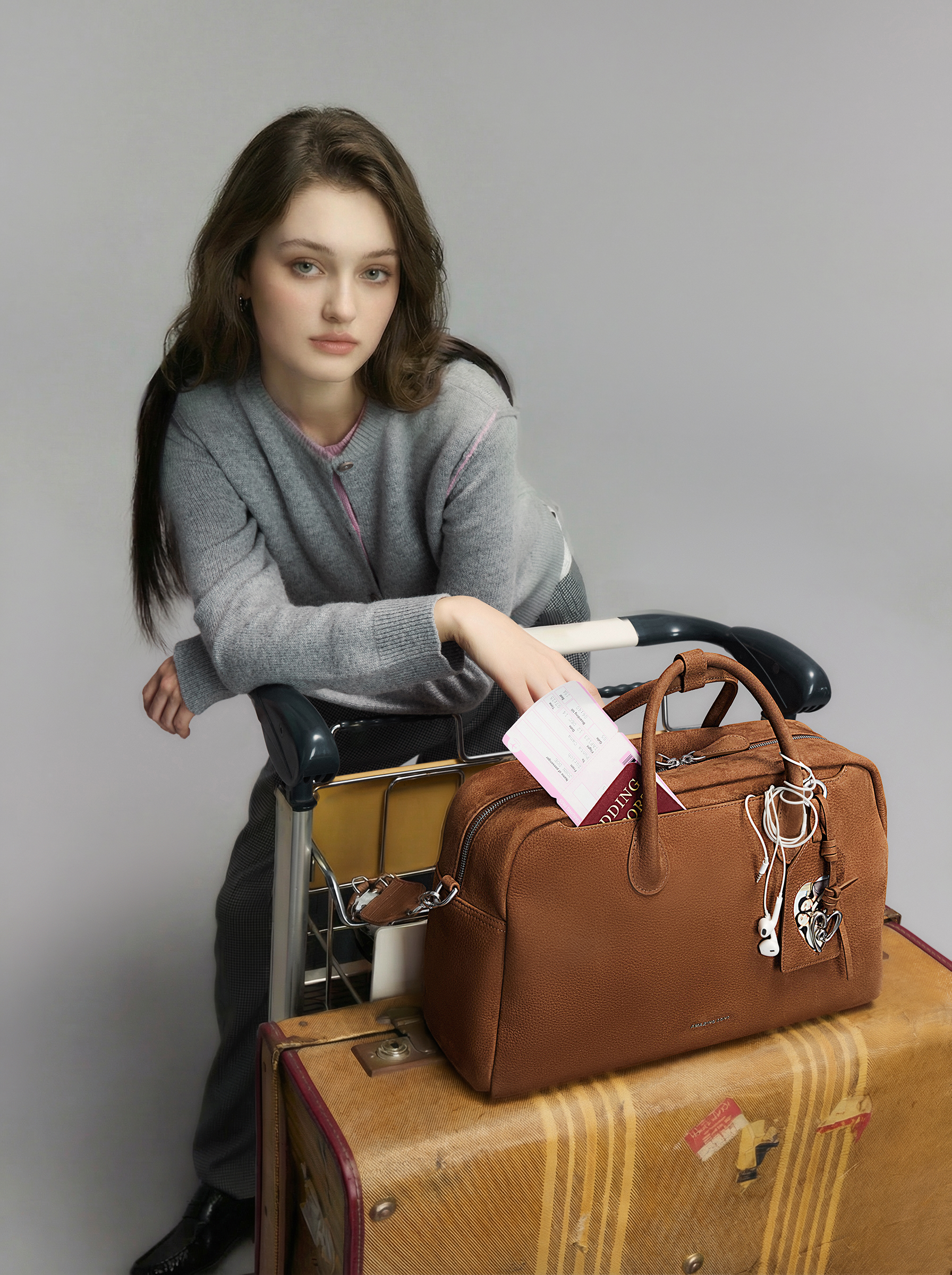
Buying a leather backpack online is a special kind of gamble.
You’re trying to judge texture, structure, weight, and long-term durability from a handful of photos—while also asking a very real question: Will this still look good after 200 commutes?
This guide is for the style-driven city dweller who wants a statement piece that can handle real life. We’ll translate leather jargon, show you what to zoom in on, and use Amazing Song as a concrete example of how to verify materials and craftsmanship when you can’t touch the bag first.
How to shop for a top grain leather backpack online (without guessing)
If you want the quick version, here’s the framework:
-
Decode the leather language (top grain, full grain, corrected grain, split).
-
Zoom in on the failure points (stitching, edges, hardware, lining).
-
Use specs to predict comfort (weight, strap range, structure).
-
Confirm materials on the exact product page—collection names can be misleading.
Along the way, we’ll answer the questions people actually search for, including top grain vs full grain leather, how to tell if a leather backpack is high quality, leather backpack hardware and stitching quality, and even how leather patina works.
First: what “top grain” actually means (and why the label can be confusing)
Let’s de-mystify the term that shows up on product pages everywhere: top-grain leather.
In plain English, it usually implies the leather comes from the outer layer of the hide (the part with the natural grain). But here’s the catch: the way brands use “grades” isn’t regulated, and the labels can be vague or inconsistent.
A helpful explainer is Popular Mechanics’ guide to leather grains and quality. Their key point: instead of treating leather like a neat ladder of “grades,” it’s more useful to understand how the hide was processed.
Here are the terms you’ll see most—and what they mean for a top grain leather backpack you plan to actually use.
Full-grain leather
Full-grain leather keeps the grain layer intact (no sanding away the surface). It tends to be the most durable and develops the kind of patina people romanticize—because it absorbs oils and wear in a more natural way.
What it’s great for: long-term durability and character.
Corrected-grain leather
Corrected grain is still from the top part of the hide—but it’s sanded and often pigmented/embossed for a more uniform look. That consistency can be a plus if you like a clean, “always polished” vibe.
What it’s great for: consistent appearance and easier cleaning.
Split leather (often marketed as “genuine leather”)
Split leather comes from the lower layer after the top grain is separated. It’s often coated to mimic the look of higher-grade leather.
What it’s great for: a lower price point.
What to watch for: it may not age the way you expect; coatings can break down over time. “Genuine leather” is frequently used as marketing language and isn’t automatically a quality signal.
Pro Tip: When a product page says “top grain,” look for extra detail (finish type, thickness, tanning method, close-ups). Vagueness is the red flag—not the phrase.
The 60-second quality check (what to inspect from photos + product pages)
If you want a leather backpack that stays gorgeous and holds up, your best skill is learning to read product photos like a detective.
Here’s a quick scan you can do in under a minute.
1) Stitching: consistency beats perfection
Zoom in until you can see the thread.
You’re looking for:
-
Straight stitch lines that run parallel to the edge
-
Even spacing (no bunching or long gaps)
-
Clean seam endings (no loose thread tails)
One photo-based checklist suggests a simple benchmark—3–5 stitches per centimeter—in a craftsmanship checklist for judging a leather bag from photos.
2) Edges: the corners tell the truth
Edge finishing is where bags start looking tired.
If edges are painted, you want:
-
Thin, even paint
-
No thick pooling near corners
-
No cracking in close-ups
If edges are burnished, you want:
-
Smooth rounding
-
A clean transition into the leather surface
3) Hardware: look for “solid, not shiny”
Hardware doesn’t need to be loud. It needs to be reassuring.
Check for:
-
Smooth surfaces (no sharp edges, bubbles, or weird seams)
-
Proportional size (tiny buckles on a big bag = stress point)
-
Close-ups of zipper pulls and clasp points
4) Lining: the inside is where brands cut corners
If a bag has interior photos, use them.
Look for:
-
Lining that lies flat (no sagging fabric tunnels)
-
Pocket seams that mirror each other
-
No visible glue residue
5) Shape retention: does the bag “stand on its own”?
Even slouchy silhouettes should have intention.
Red flags in photos:
-
The bag collapses inward when empty
-
The base looks warped
-
Side panels don’t match
Quality + comfort: what matters when you wear it all day
A leather backpack can look flawless on a shelf and still be a pain at 4:30 p.m. when your shoulders are done with you.
Weight isn’t just a number—it’s your commute
You’ll usually see weight listed in grams. As a rough feel:
-
~450–550g: often feels light for daily carry
-
~650–1,000g: can still be fine, but comfort depends on strap design and how you pack it
Weight also interacts with structure:
-
Stiffer leather can feel heavier (and more supportive)
-
Softer leather can feel lighter (and more relaxed), but may slouch more
Strap comfort: what to look for in specs
When a product page includes strap lengths, your goal is adjustability.
Look for:
-
A wide enough strap to distribute weight
-
A length range that fits coats and layers
-
Attachment points that look reinforced (extra stitching, thicker leather tabs)
Organization: intentional pockets beat “more pockets”
For daily life, the best setup is usually:
-
One main compartment that fits your essentials
-
One secure inner pocket for small valuables
-
A structure that doesn’t force everything to settle at the bottom
Style that ages well: patina, texture, and color expectations
One underrated part of buying a top grain leather backpack is deciding what kind of aging you’ll love.
Patina: what you should expect
In general:
-
Full grain often shows more character over time
-
Corrected grain tends to stay visually consistent longer
-
Heavily coated split leather may change in less predictable ways
Texture: the grain should look intentional
Good leather photos usually show:
-
A consistent grain pattern (not overly plastic-smooth)
-
Realistic lighting and close-ups
-
Multiple angles that show structure
If you only see one studio angle and zero close-ups, you’re missing the information you actually need.
Amazing Song Hobo: how to verify materials before you fall in love
Here’s where we get specific—without turning this into a pitch.
Amazing Song has a wide range of “Hobo” styles. Some are listed as top-grain cowhide, while others use different material constructions. The point isn’t “one is good, one is bad.” The point is: don’t assume the collection name tells you the material story.
Start with Amazing Song’s Hobo collection and do a quick two-step verification:
Step 1: Confirm the listed material on the exact item
Use the material field as your first filter, then double-check that the product photos show close-ups of edges, stitching, and hardware.
Step 2: Match the silhouette to your real-life needs
If you specifically want a backpack shape, check the backpack listings and the specs carefully. For example, the Hobo Backpack specs on Amazing Song show a compact backpack silhouette and list materials and dimensions.
If you’re still deciding between silhouettes (hobo vs backpack vs crossbody), the broader catalog in Amazing Song’s all bags collection helps you compare shapes and materials side by side.
And if you want styling inspiration (how a hobo/backpack hybrid reads with different outfits), their fashion content is useful for seeing the vibe in context—start with the Ultimate Guide: best handbags for your personality.
⚠️ Warning: Don’t buy a bag based on “top grain” alone. Verify (1) material, (2) hardware close-ups, (3) strap adjustability, and (4) return terms—in that order.
FAQ: quick answers before you hit “Add to cart”
Is top grain leather better than full-grain?
Not automatically. “Top grain” can be used broadly, while “full-grain” is more specific. What matters is the leather’s finish and construction.
Does “genuine leather” mean high quality?
Usually, no. It often indicates split leather, which can be coated and may not age as well. It’s not a reliable quality signal on its own.
How can I judge leather quality if I’m shopping online?
Use close-ups to inspect stitching, edges, and hardware—then check lining photos and specs.
What’s the biggest “silent deal-breaker” for daily-use backpacks?
Comfort and structure. A gorgeous bag that slouches, digs into your shoulder, or becomes a black hole by noon is a slow regret.
How many options should I compare before choosing?
Three is a sweet spot: one you love visually, one that’s more practical, and one “wildcard” option. Comparing three forces you to clarify what matters (weight, strap, structure, material) without spiraling.
Next steps (low-commitment)
If you want a clean, confident way to shop, pick 2–3 candidates and run the 60-second scan—stitching, edges, hardware, lining, then specs.
You’ll buy less impulsively, and you’ll end up with a bag that still looks like you six months from now.