



How to Choose the Right Shoulder Bag for Your Style
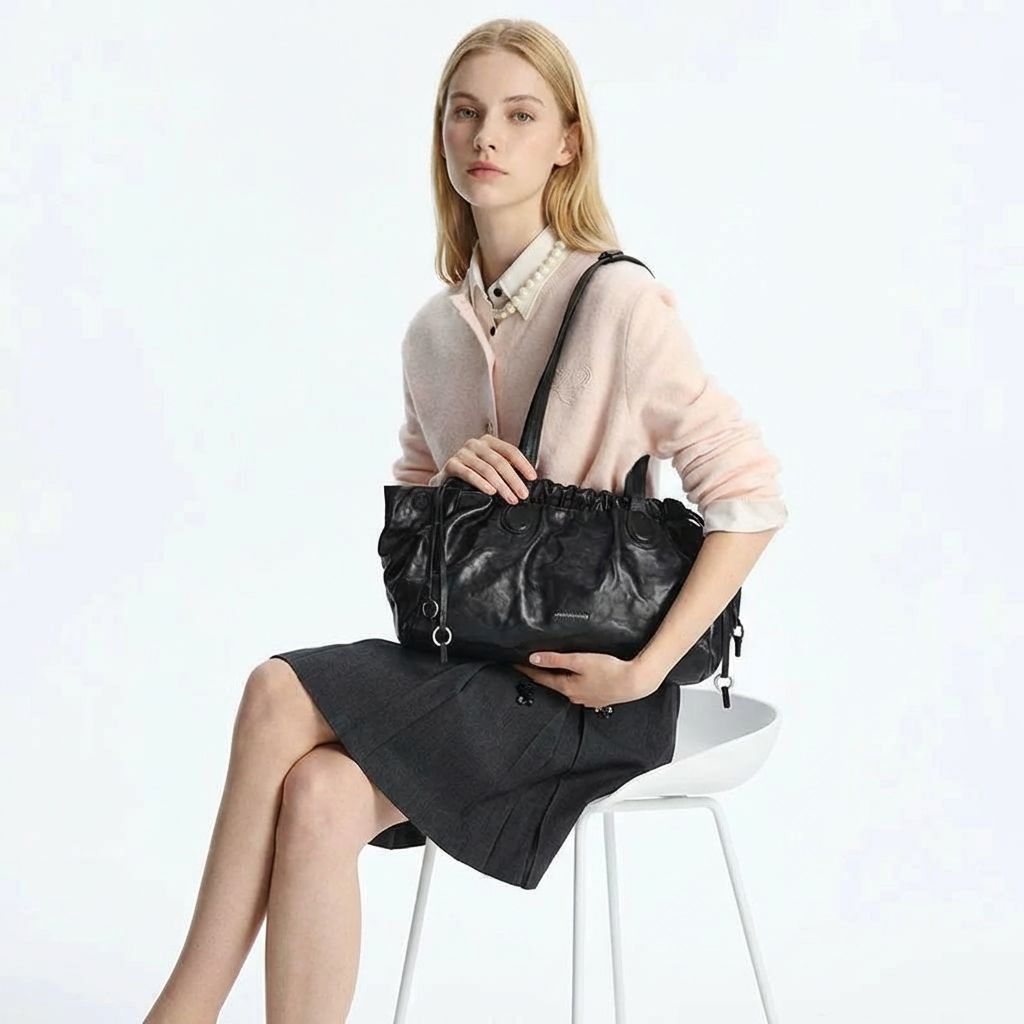
You know the feeling: a shoulder bag looks perfect in the mirror… and then it spends the whole day sliding off your shoulder, digging in, or turning into a black hole where your keys go to disappear.
Let’s fix that.
This guide gives you a simple framework you can use on any product page to choose the right shoulder bag for your style, your daily load, and your comfort level—without buying three “almost right” bags first.
To keep it practical, we’ll translate personal style into specs you can actually shop by (strap drop, size, weight, and organization).
Step 1: Do a 30-second needs check
Before you fall for the silhouette, get honest about what you carry.
What you carry
Pick the closest bucket (this is basically your shoulder bag size guide):
Essentials-only: phone, wallet/cardholder, keys, lip balm.
Day-to-night: essentials + sunglasses + small makeup pouch.
Workday: essentials + charger + notebook/tablet + maybe a water bottle.
When you carry it
Because your bag needs change with the scene:
Commute + walking → comfort and security matter more than “looks tiny.”
Errands → quick access (no wrestling with closures).
Dinner + events → lighter weight, sleeker profile.
Pro Tip: If you can’t name your “top 5” carry items, your next bag will be too big. That’s how clutter happens.
Step 2: Choose the right shoulder bag silhouette for your vibe and real life
A shoulder bag silhouette isn’t just aesthetic—it’s also how the bag behaves on your body.
Structured vs. soft: the choice you’ll feel every day
Structured bags hold their shape, look polished, and usually keep items easier to find.
Soft/slouchy bags feel relaxed and cool, but they can sag, slump, and hide everything at the bottom.
If you’re someone who hates digging for AirPods? Lean structured.
If you love a laid-back, “thrown-on” look and carry light? Soft silhouettes can be your thing.
Quick match: silhouette → use case
Baguette/underarm styles: sleek, close-to-body, great for lighter carry.
Hobo styles: roomy and effortless, better when you want more capacity.
Bucket styles: good capacity, but check closures and internal organization.
Step 3: Shoulder bag strap drop (the comfort make-or-break)
Strap drop is how low the bag hangs when it’s on your shoulder. If the drop is wrong, the bag can pinch, swing, or constantly slip.
According to Petite Simone’s strap-length guide (2024), a common reference range is roughly 12–14 inches of strap drop for shoulder bags, while crossbody carry often uses a longer drop range.
Comfort isn’t optional: the strap should loop comfortably without pinching under your arm or pressing into your shoulder blade (Charles & Keith, 2025).
How to measure strap drop (no math degree required)
Put on a shoulder bag you already find comfortable.
Measure the vertical distance from the top of the strap (where it sits on your shoulder) down to the top of the bag.
Use that number as your “sweet spot” when shopping.
Shoulder vs. crossbody: when to switch
If your bag is heavy (workday carry, travel days), consider a bag that can convert to crossbody. A crossbody is typically worn around waist level or just above the hip for comfort and balance, according to Canvelle’s crossbody placement guide (2025).
This is also where you’ll hear people searching for how to wear a shoulder bag without constant slipping—fit and placement do the heavy lifting.
Step 4: Comfort check: straps, weight, and where the load sits
A beautiful bag that hurts is not a flex.
Strap width matters
If you carry more than the essentials, look for:
Wider straps (they distribute weight better).
Adjustability (so you can move the bag higher when walking more).
Watch empty weight (especially if you’re sensitive to shoulder strain)
Brands often list bag weight. Take advantage of it.
As a rule: if a bag feels heavy empty, it’ll feel brutal once you add your life to it.
Pack for comfort
Single-strap bags can pull if your items are uneven. Charles & Keith’s shoulder bag guide (2025) suggests keeping heavier items centered and closer to your body.
Step 5: Organization: avoid the “black hole” design
This is the part people skip because it’s not romantic. It’s also the part that makes you keep using the bag.
Look for at least two of these:
A zip closure (especially for commuting)
A dedicated pocket for keys or cards
A structured base so the bag doesn’t collapse
A main compartment that fits your “top 5” without stacking like Jenga
⚠️ Warning: A single big compartment + a dark lining is a recipe for chaos.
Step 6: Shoulder bag materials: choose what fits your lifestyle
Material is style—but it’s also maintenance.
Leather (and leather types)
Leather can age beautifully, but different grades and finishes behave differently. When shopping online, look for clarity on:
the leather type
the lining
the hardware
Suede
Suede is gorgeous and tactile, but it’s more sensitive to water and friction. If you’re tough on bags or you live in unpredictable weather, suede might be your “special occasions” choice.
Vegan leather
Vegan leather can look amazing, but durability varies by material blend and construction. Your best move is to check return policies and look for close-up photos of edges, corners, and straps—those are the stress points.
Step 7: The online product-page checklist (save this)
If you’re buying online, this is how you reduce regret.
Specs you should be able to find
Dimensions (L × H × W)
Strap drop or strap range (especially if adjustable)
Weight
Closure type (zip, flap, magnetic)
Pocket count (or at least interior photos)
Material + hardware info
Red flags
No dimensions (or only “small/medium” with no numbers)
No strap info
Only studio photos with no on-body scale
Hardware that looks overly heavy for the bag size
A return policy that’s hard to locate or overly restrictive
Step 8: See the framework in action with Amazing Song
If you want shoulder bags that balance playful personality with everyday practicality, you can browse the Amazing Song shoulder bags collection and apply the checklist above.
Here’s how to shop it like a pro:
Filter by the silhouette you actually use (underarm/baguette, hobo, bucket).
Compare weight + strap range across a few favorites.
Look for the organization cues (zip closure, compartments) that match your day.
If you’re still deciding between silhouettes, start with Amazing Song to compare shapes side-by-side, then narrow into shoulder bags once you know what you’re aiming for.
Next steps: choose your “non-negotiables” and buy once
If you only remember three things, make it these:
Your carry list decides the size.
Your strap drop decides the comfort.
Your organization decides whether you’ll actually keep using it.
When you’re ready, pick 2–3 options and check them against the product-page checklist. You’ll feel the difference immediately—before checkout.